
Regardless of the cause, the repair method is the same. Plaster cracks are divided into 2 categories:
-
Surface cracks affecting the final coat plaster, and
-
Deep cracks reaching down to the base coat plaster.
Surface cracks of the final coat plaster
A) Localized repair
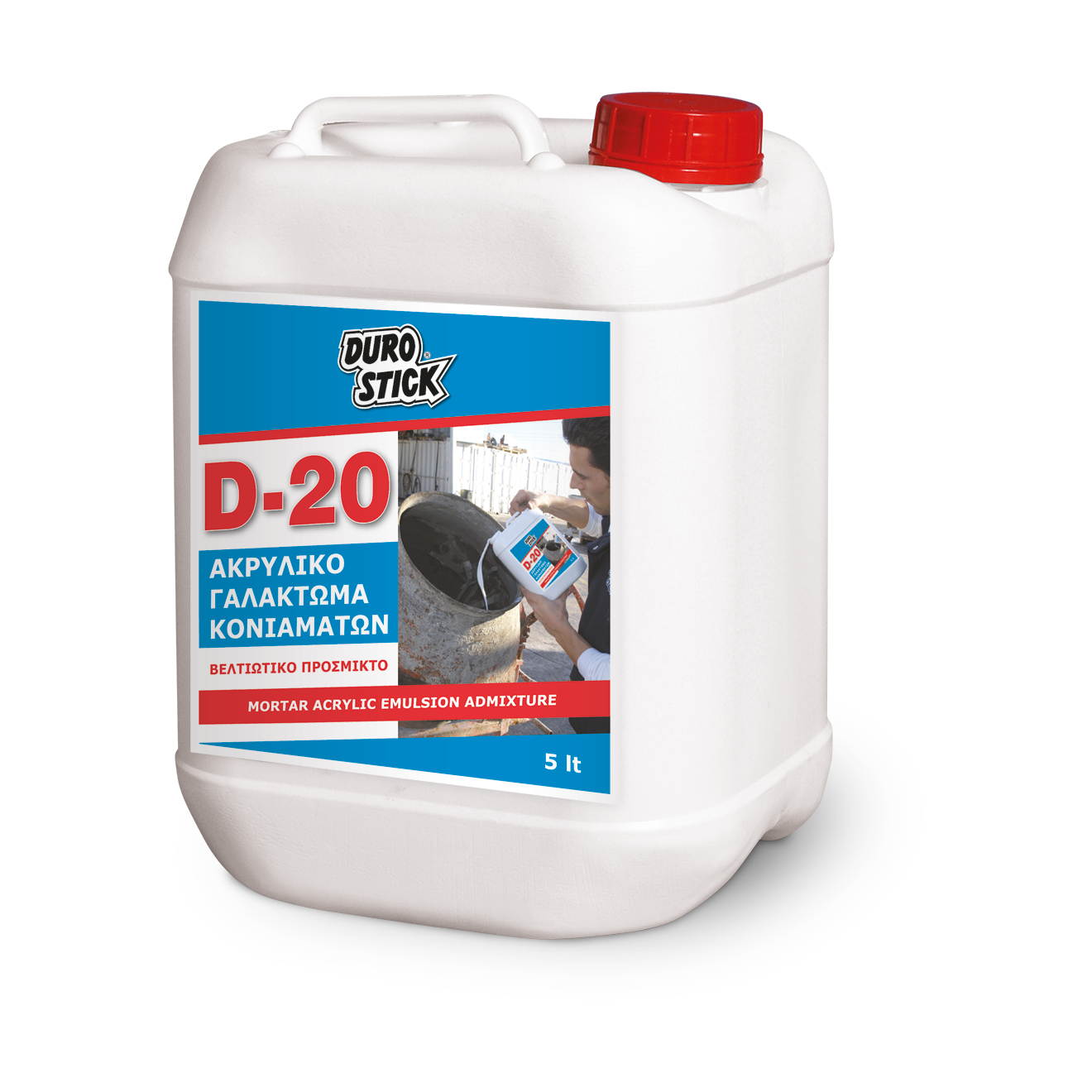
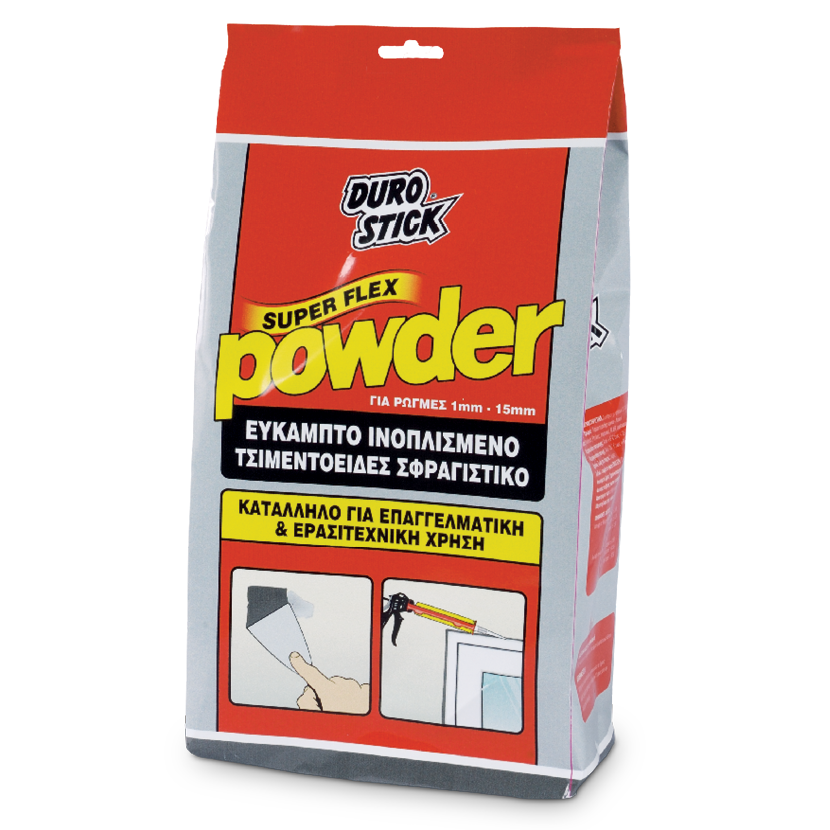
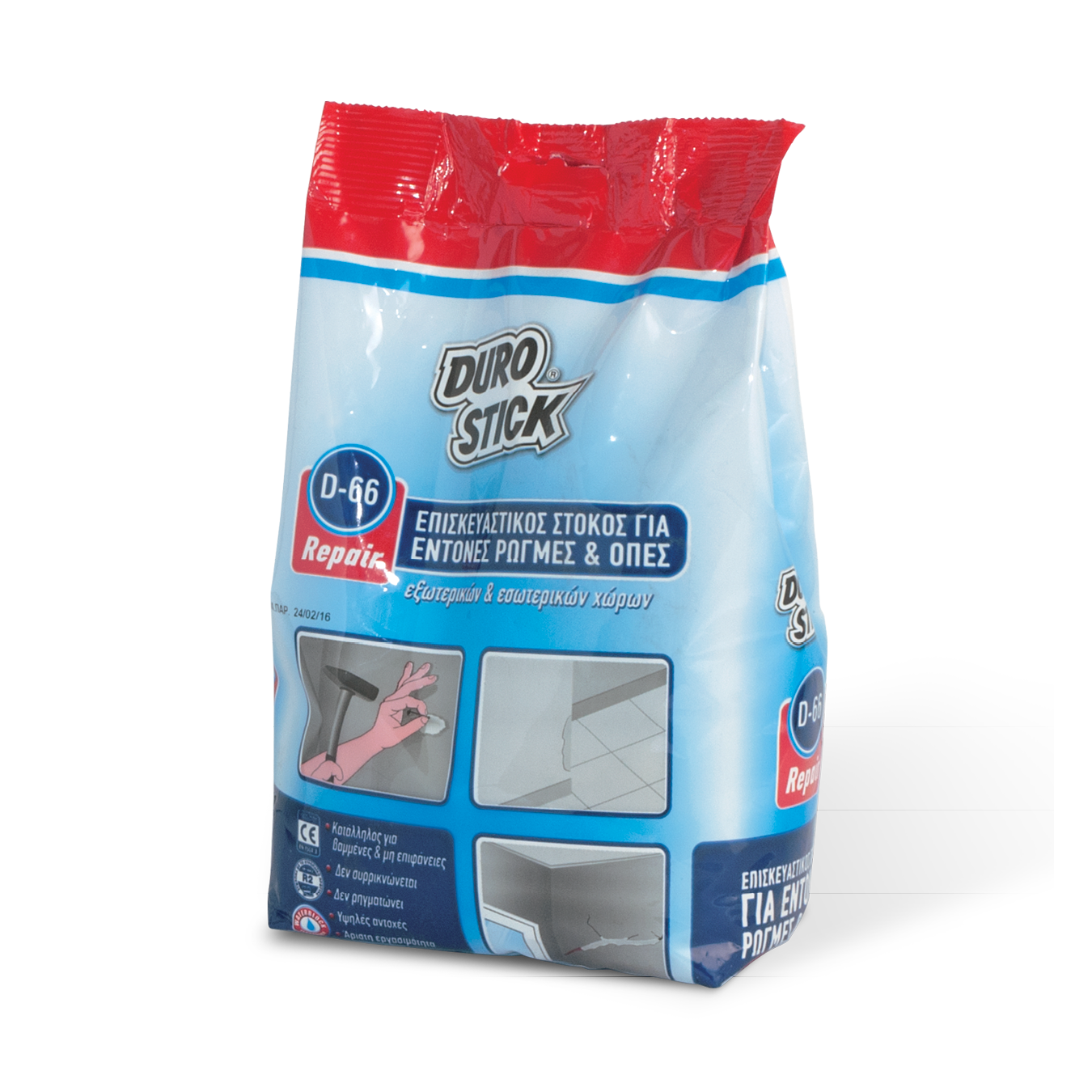
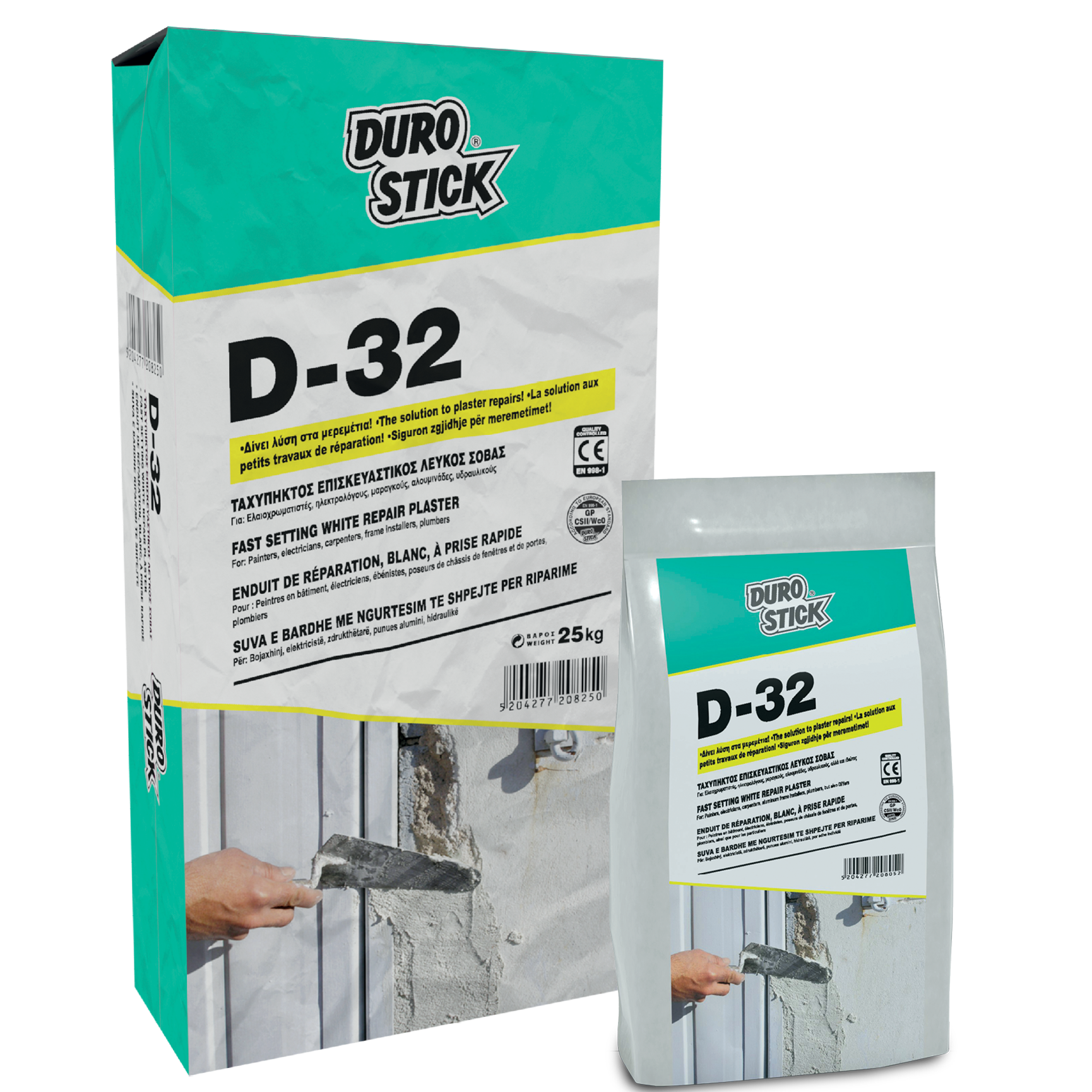
If the cracks are up to 2mm wide, superficially remove the final coat plaster on both sides of the crack, thus increasing the crack width to approximately 5mm. Clean away dust and dampen with a solution of D-20 acrylic emulsion diluted with water at a 1:2 to 1:3 ratio.
Before it dries:
-
Seal with the flexible, fiber-reinforced cementitious sealant SUPER FLEX POWDER, or
-
With the repair putty for severe cracks and holes D-66 REPAIR, using a stainless steel putty knife.
-
Alternatively, we can use the fast-setting repair plaster D-32, reinforced with D-20 acrylic emulsion.
B) Complete repair
If the cracking covers a large part of the surface, a full-surface technical application is deemed necessary. Therefore, after cleaning and further opening the cracks as described above, we have the following options:
-
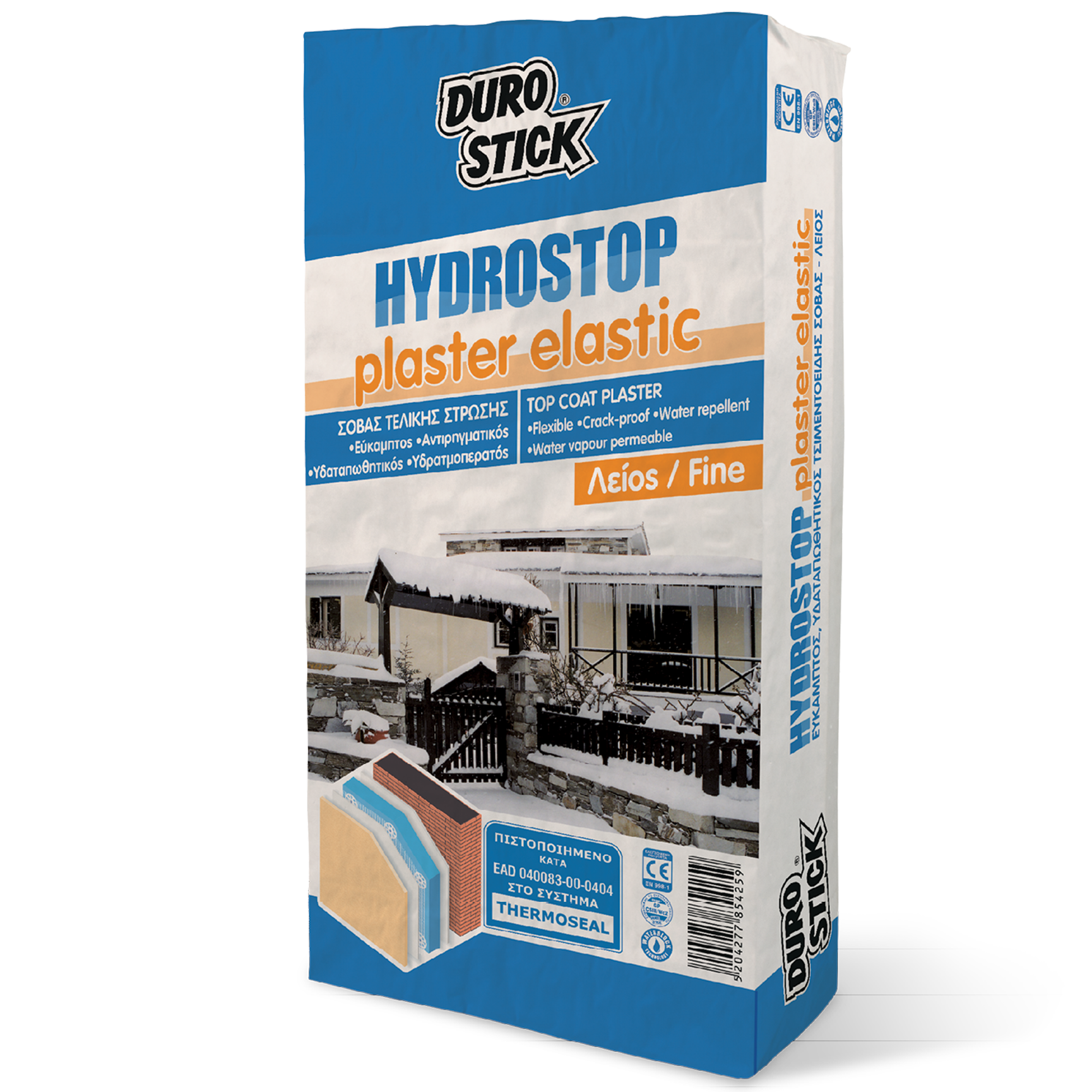
Full plastering of the surface with the flexible water-repellent plaster HYDROSTOP PLASTER ELASTIC, which will “prevent” the reappearance of cracks, or
-
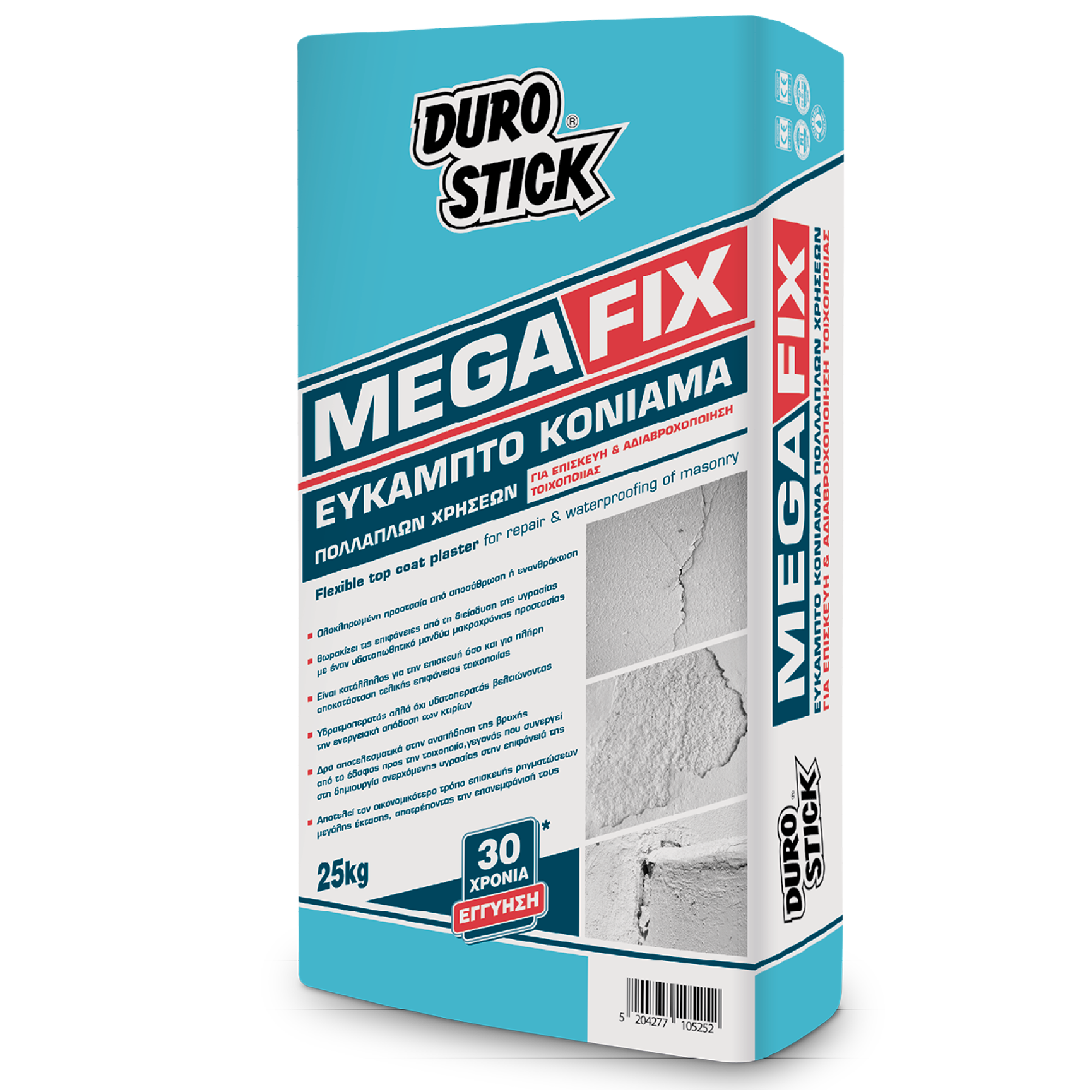
Full surface protection with the flexible multi-purpose mortar MEGAFIX.
-
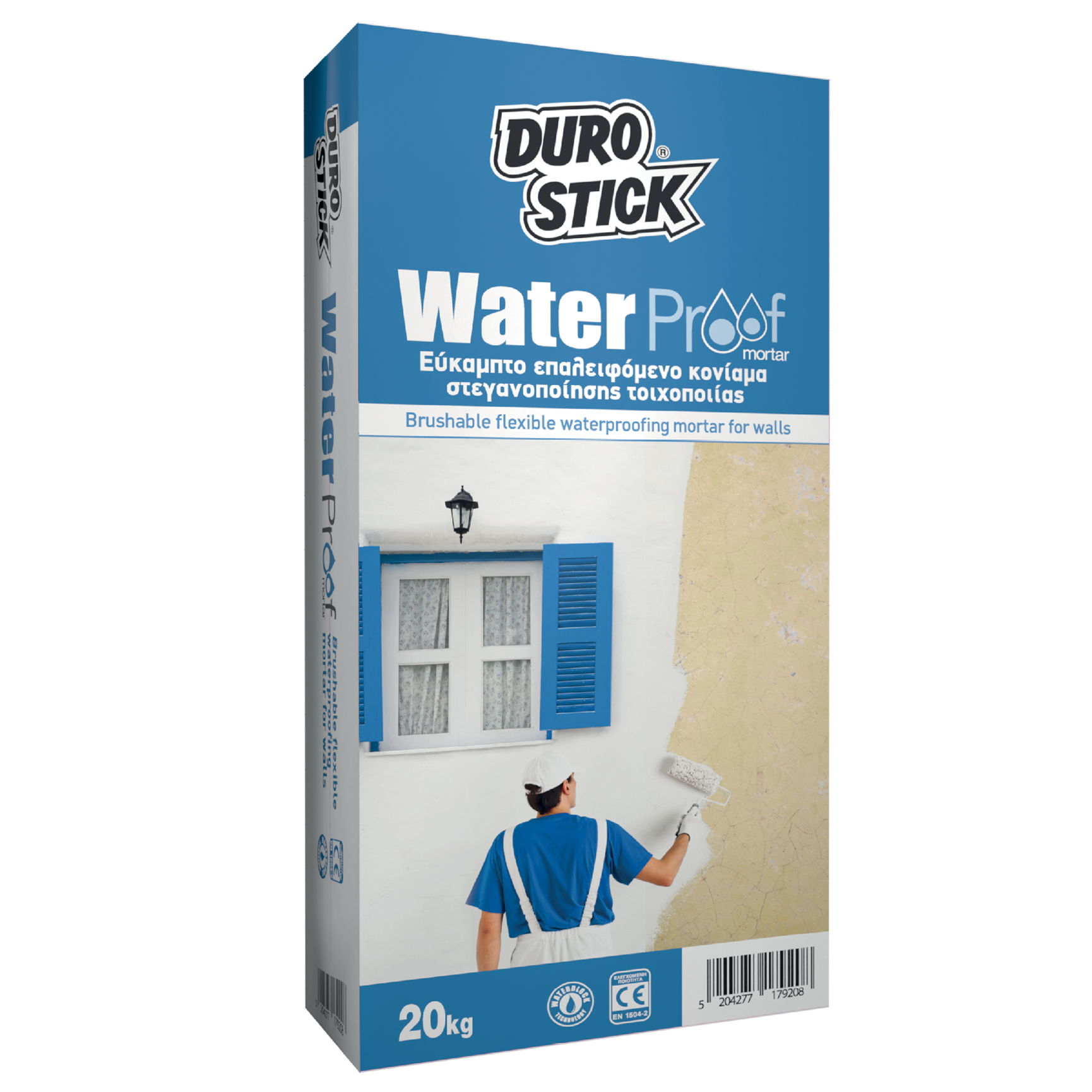
Alternatively, another complete solution for plaster protection is achieved by waterproofing it with the flexible mortar WATERPROOF MORTAR.
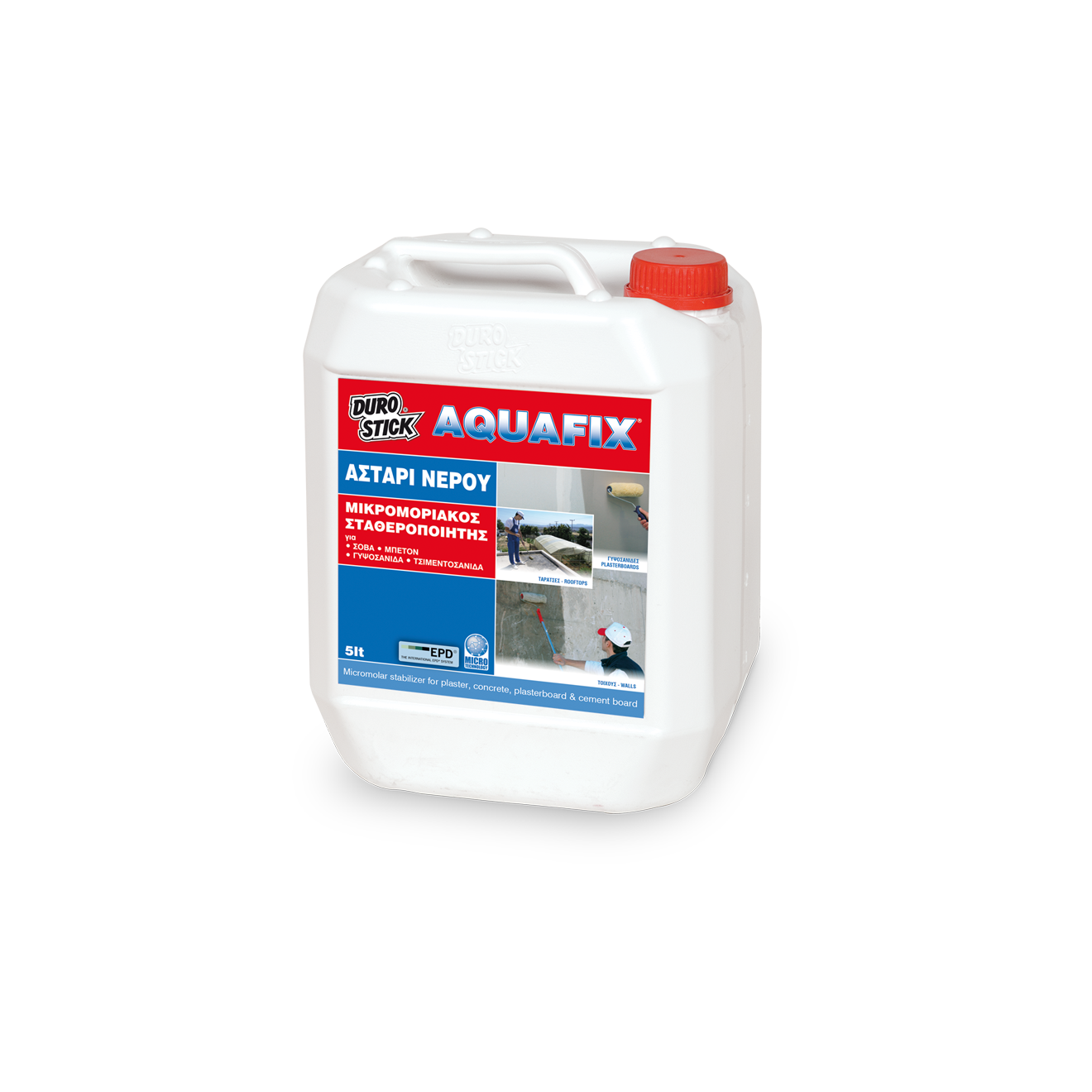
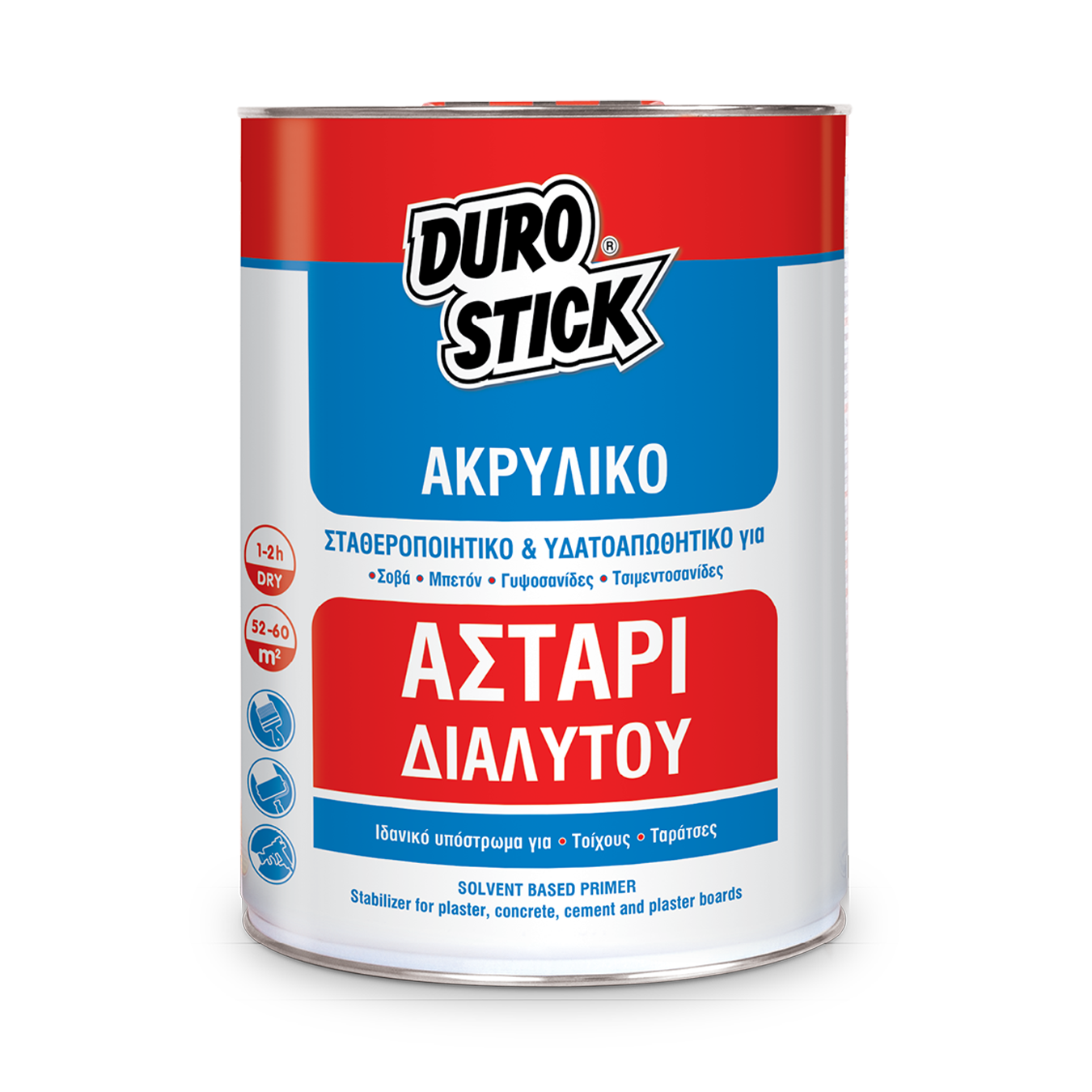
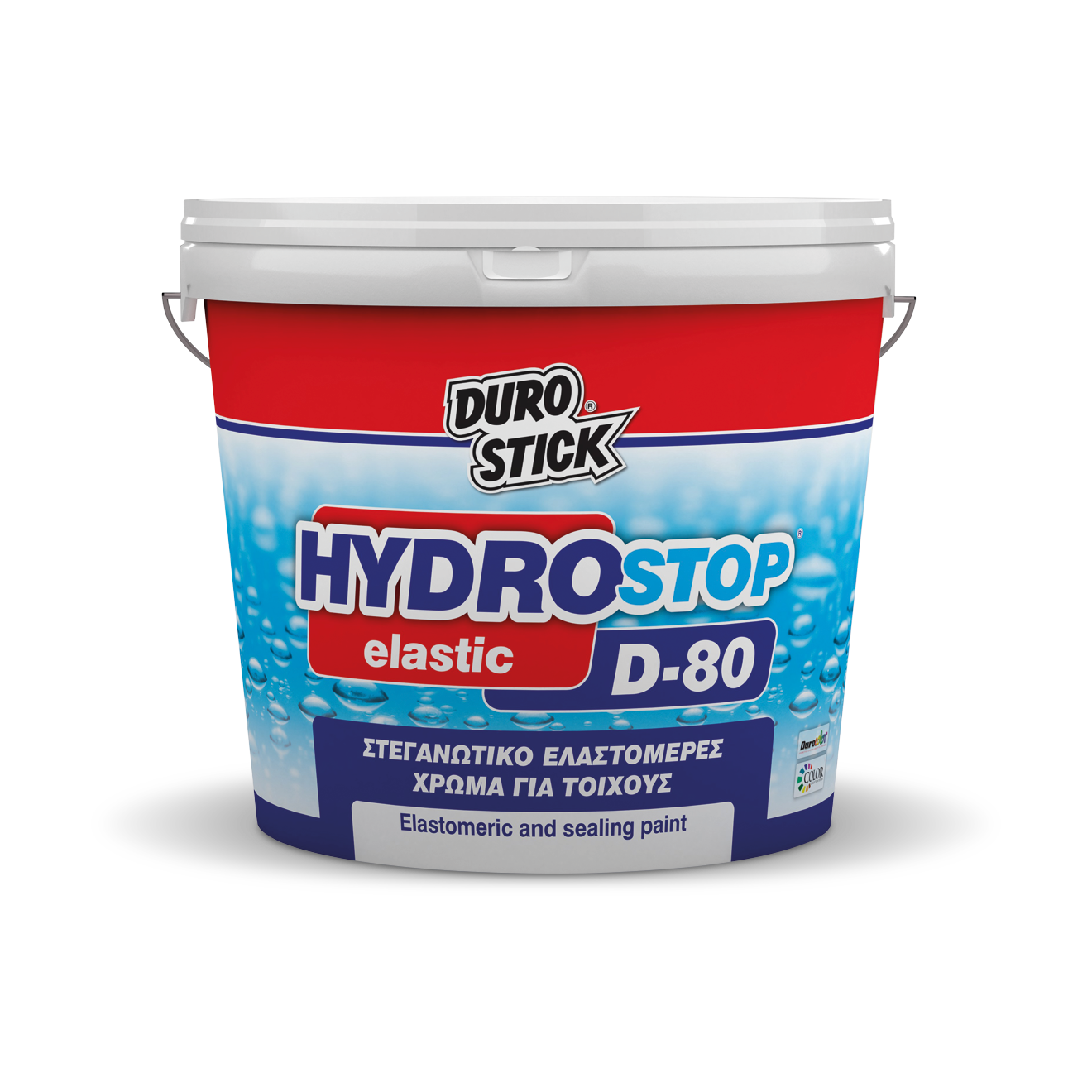
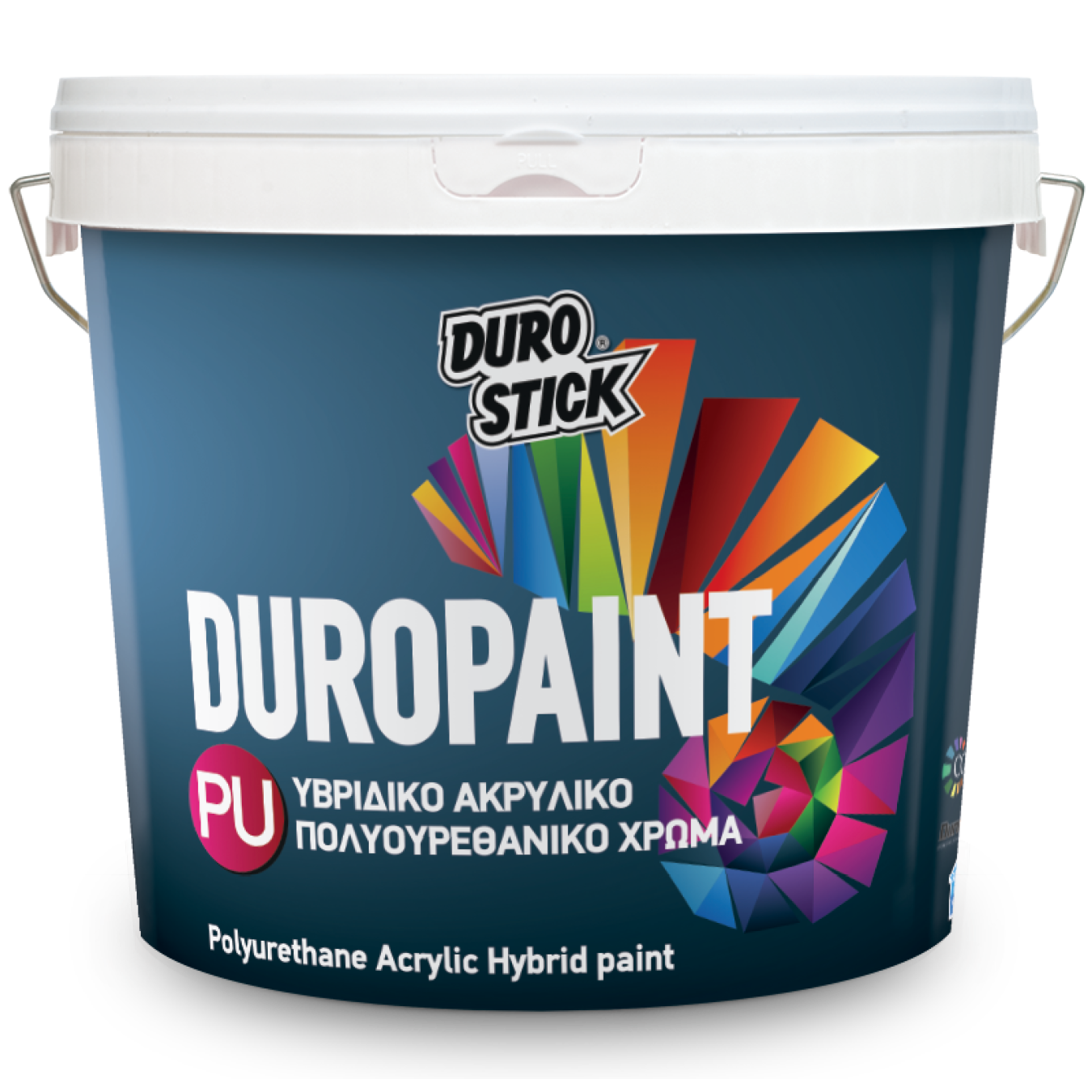
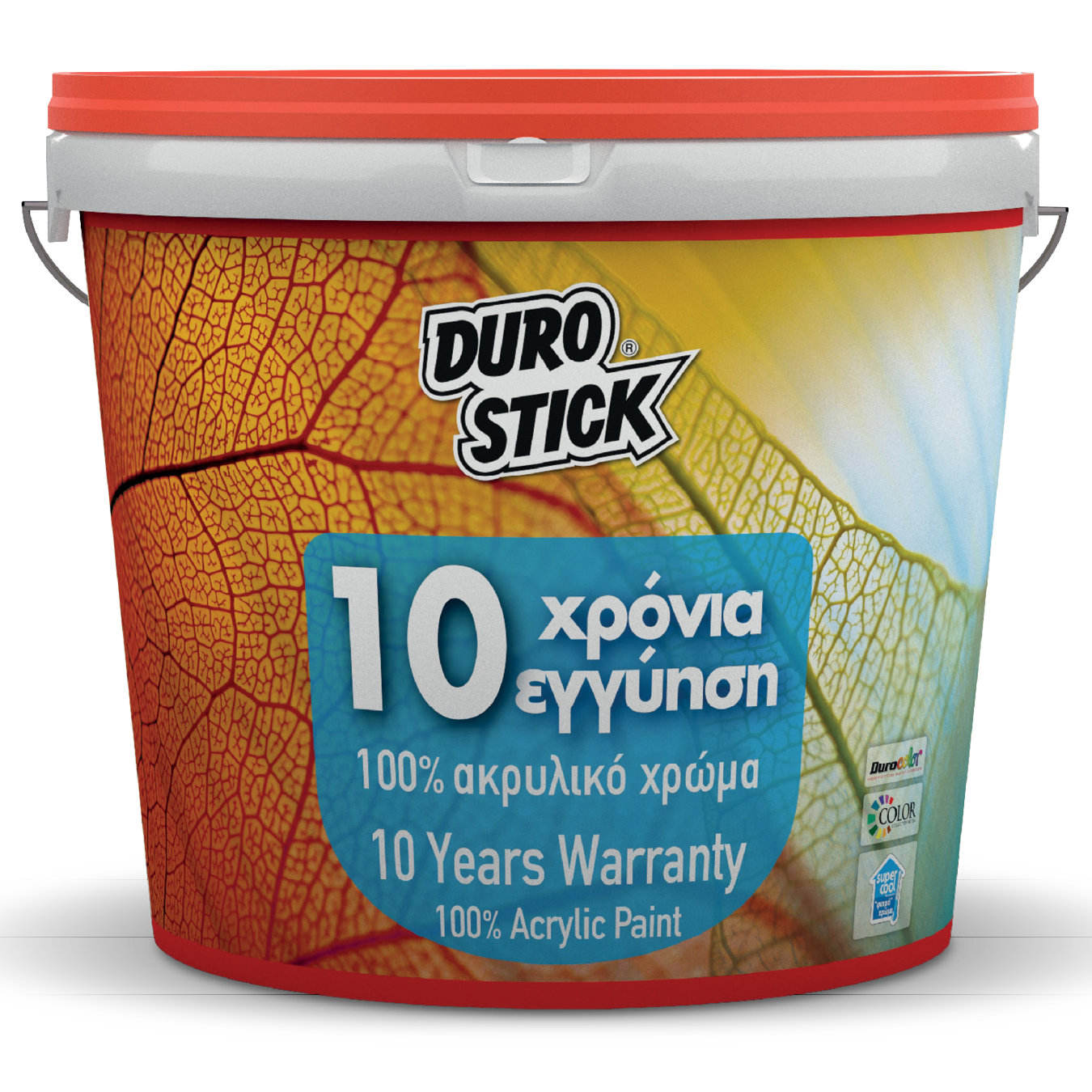
In each of the above cases, proceed with priming using the micromolecular stabilizer AQUAFIX or SOLVENT PRIMER, and paint the surface with D-80 HYDROSTOP ELASTIC, DUROPAINT-PU, or 10 YEARS WARRANTY.
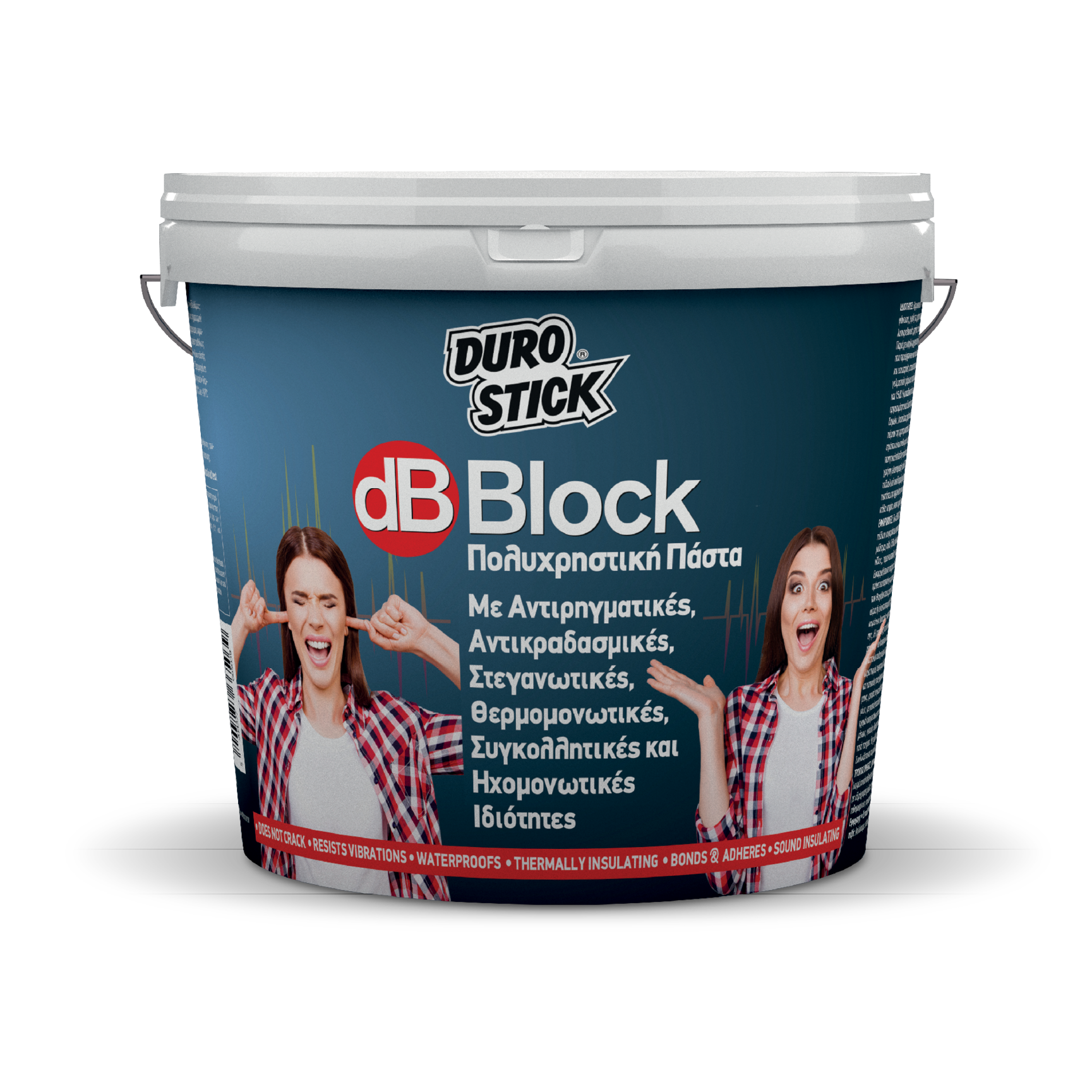
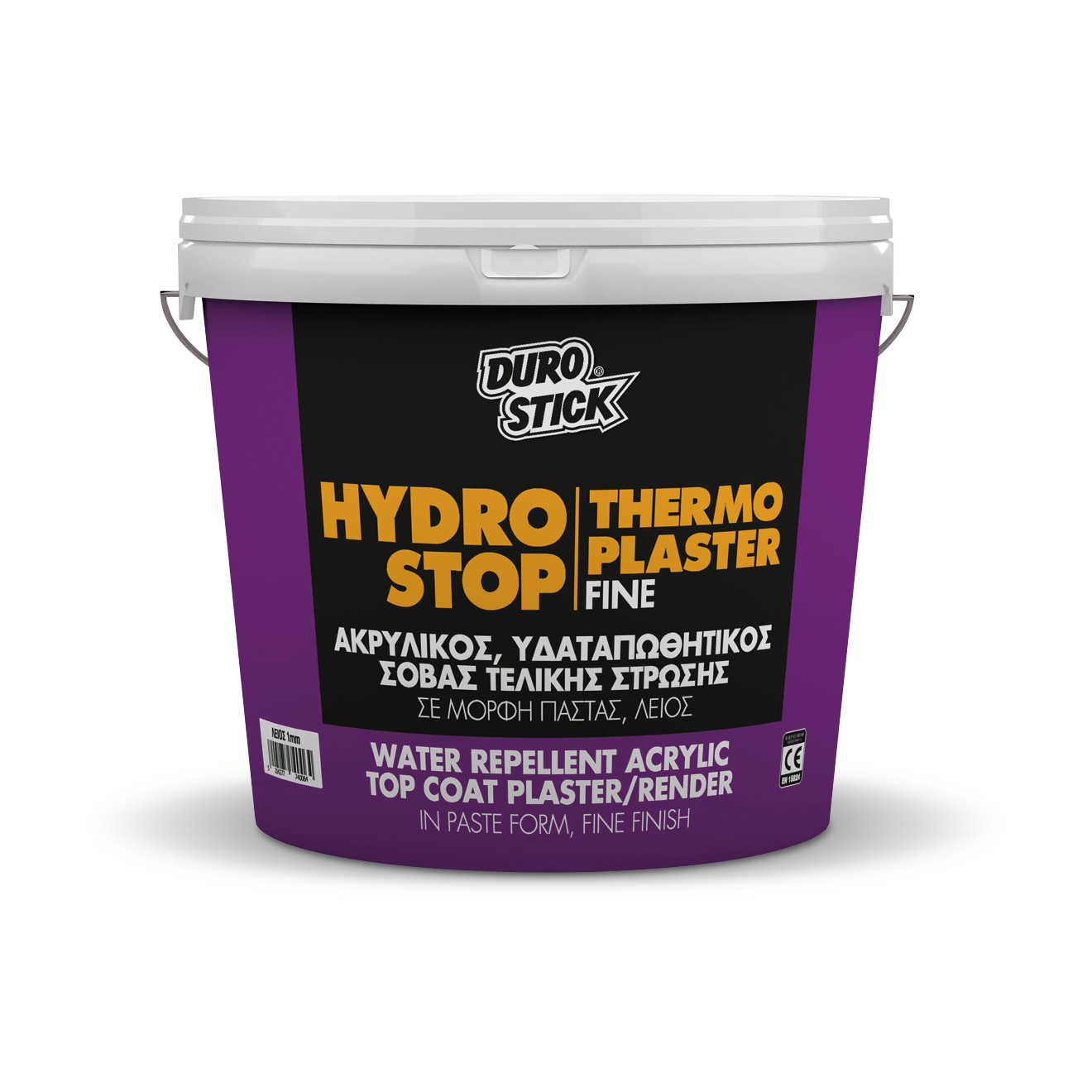
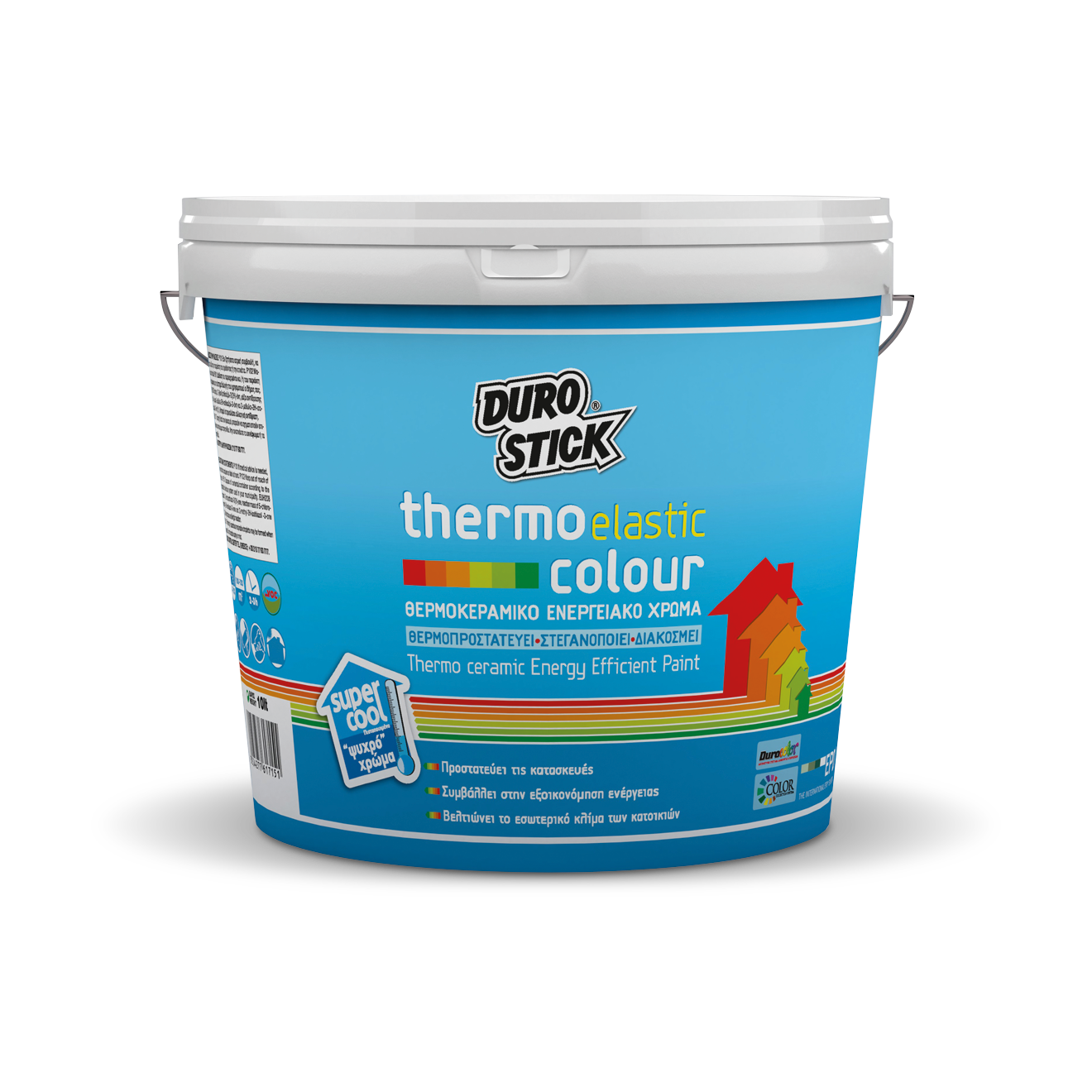
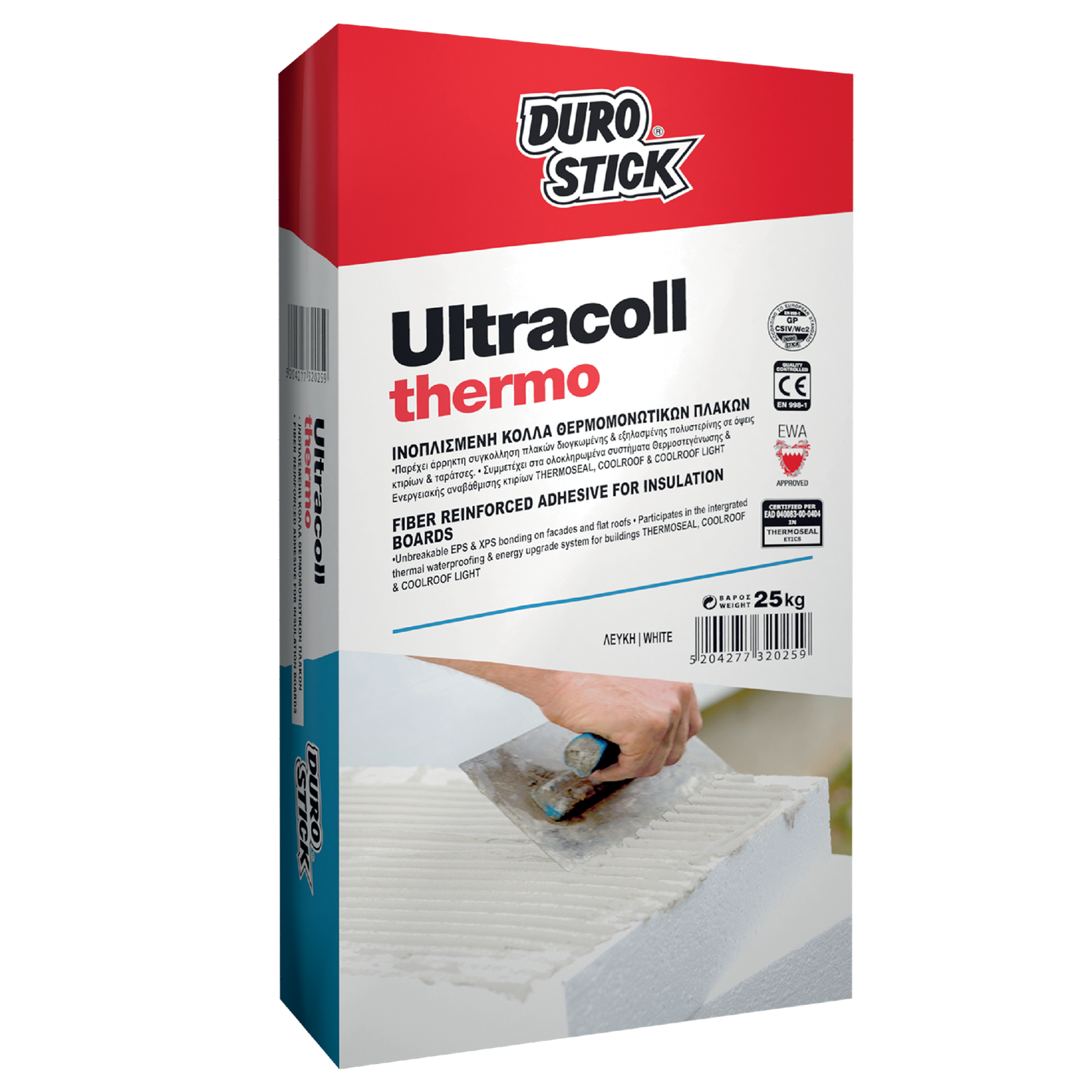
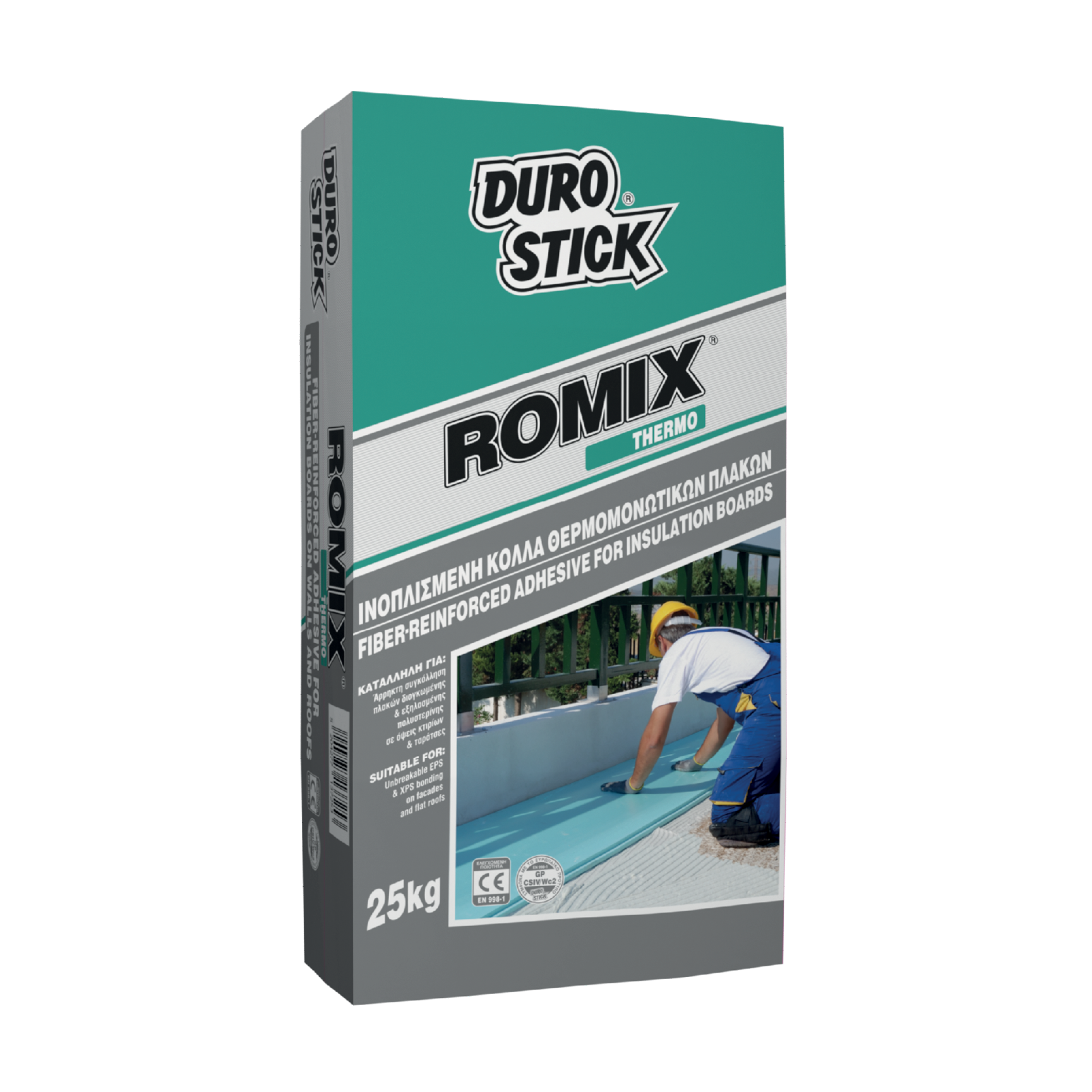
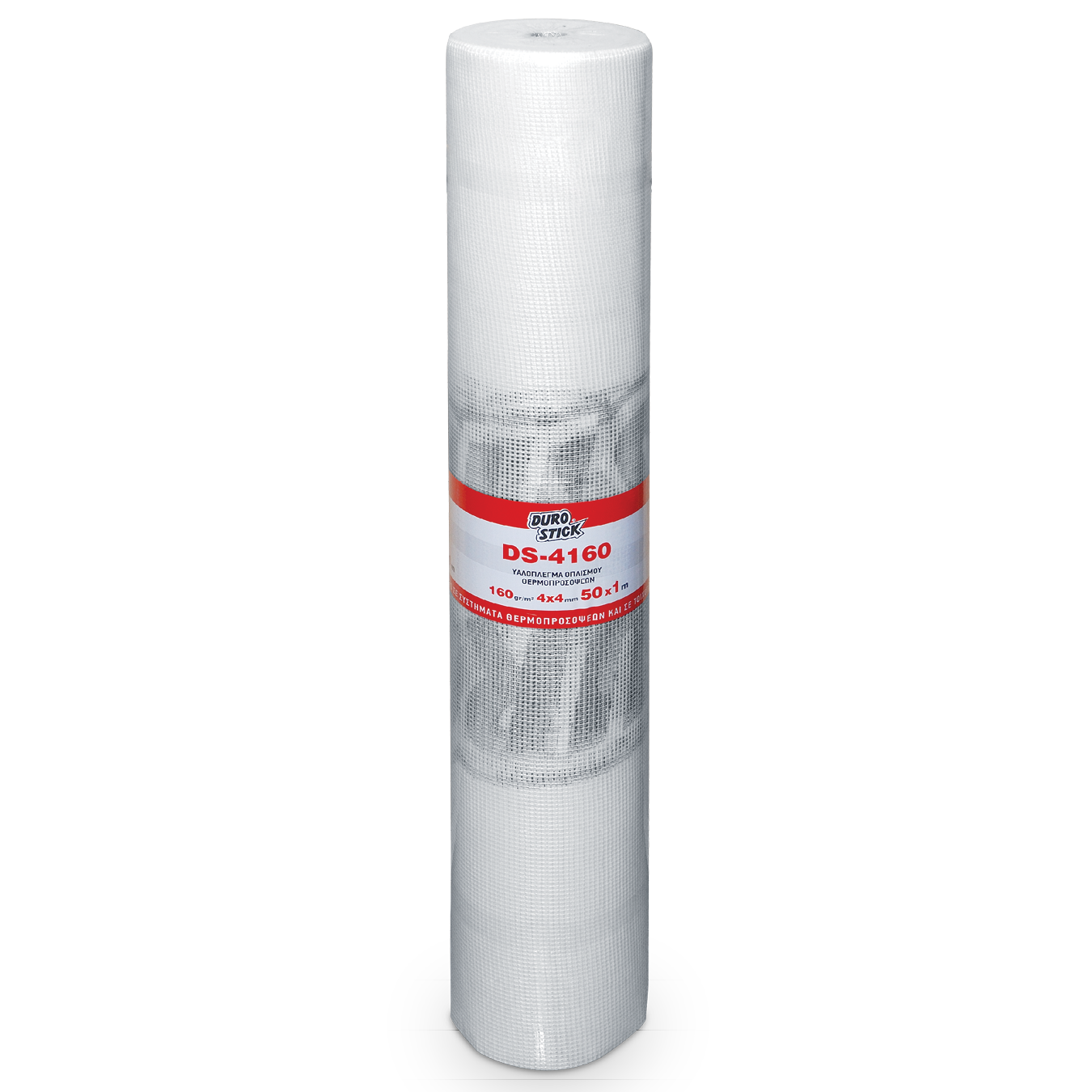
For cases of more severe damage, 2 additional technical solutions for complete repair are recommended: 4. Full surface protection by coating with the multi-purpose paste dB BLOCK at a thickness of 2-3mm. In this way, we achieve strong anti-crack and anti-vibration protection, as well as waterproofing, soundproofing, and energy upgrade. Finally, topcoat either with paint (D-80 Hydrostop Elastic or Thermoelastic Colour) or with paste-form final coat plasters (Hydrostop Acrylic Plaster fine, Hydrostop Silicone Plaster, Hydrostop Thermo Plaster FINE, or flexible cementitious plaster Hydrostop Plaster Elastic). 5. Full strong anti-crack protection by applying a special resin-modified, fiber-reinforced mortar at a thickness of approximately 3mm (Ultracoll Thermo or Romix Thermo) while simultaneously embedding the alkali-resistant fiberglass mesh DS-4160, followed by the application of final coat plasters as previously described.
Deep cracks of the base coat plaster
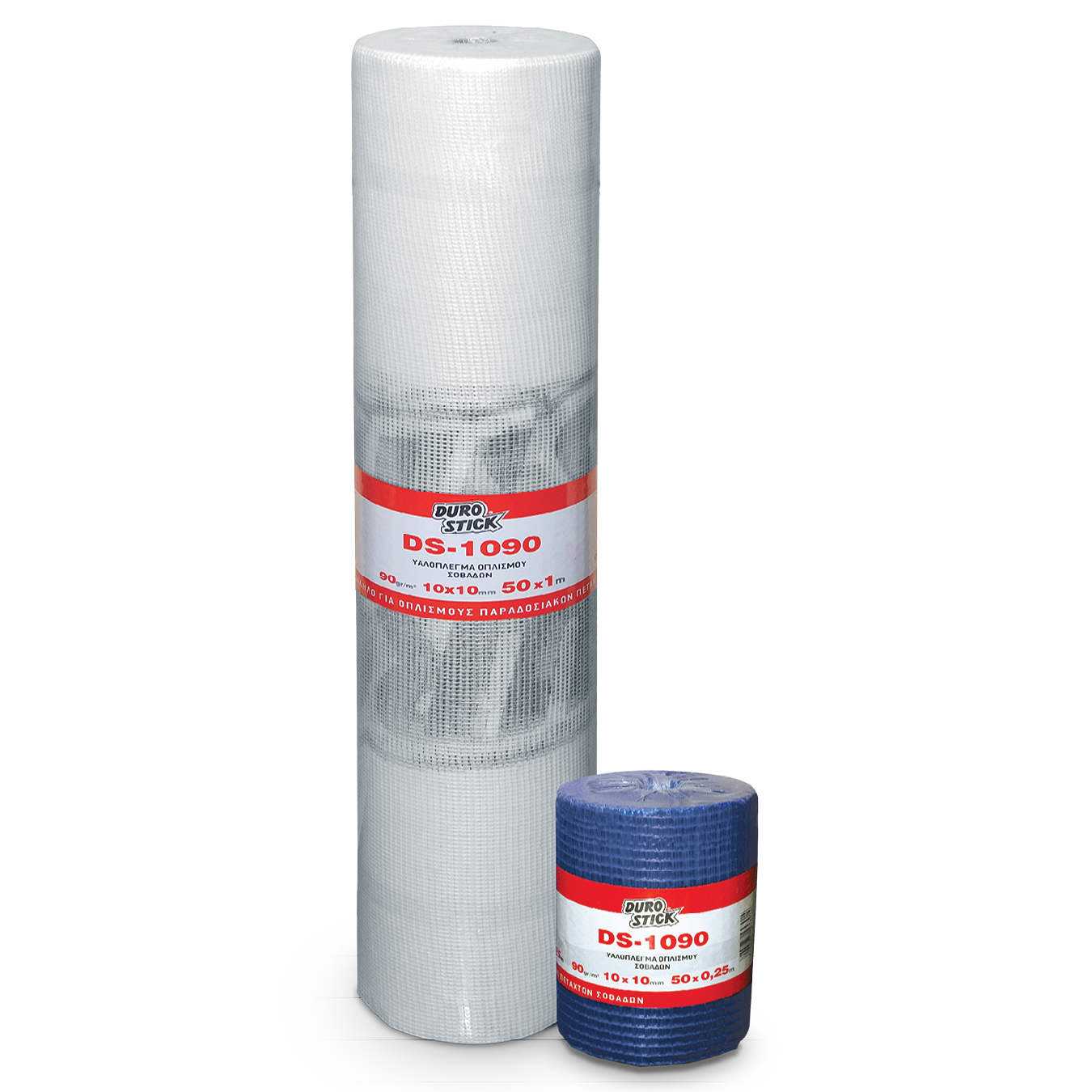
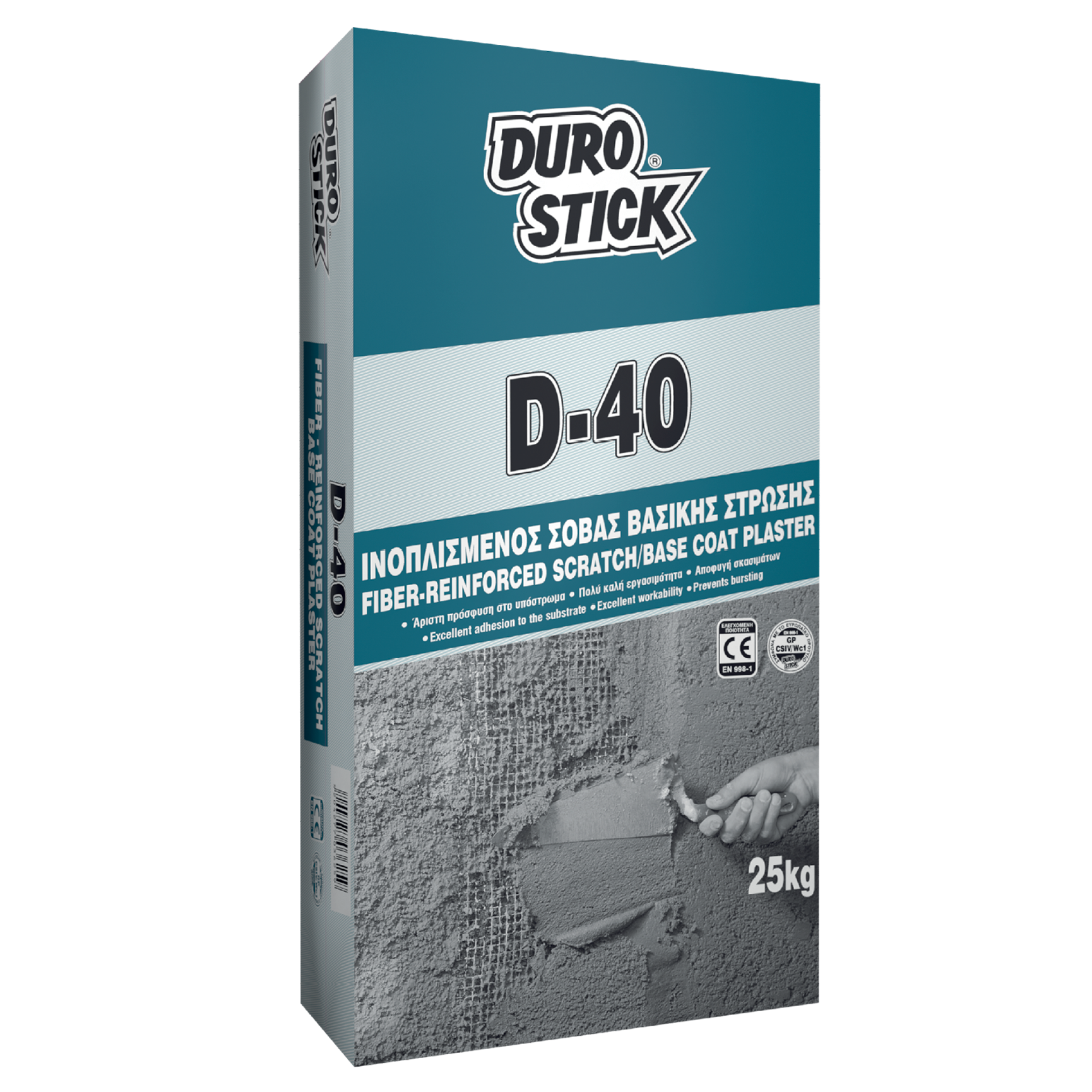
Proceed with removing the plaster to a width of 5 to 10cm, depending on the extent of the problem, on both sides of the crack and to a depth sufficient to reach a stable substrate. Clean away dust and dampen with a solution of D-20 acrylic emulsion diluted with water at a 1:2 to 1:3 ratio. Before the solution dries, fix the alkali-resistant fiberglass mesh DUROSTICK DS-1090 and apply the fiber-reinforced base coat plaster D-40 as a “dash coat.” After 24 hours, apply the fiber-reinforced base coat plaster D-40 again, reinforced with D-20 acrylic emulsion, at a thickness that does not exceed the thickness of the existing base coat plaster.
A) Localized repair
After 24 hours, apply the fast-setting final coat plaster D-32, reinforced with D-20 improving resin, or alternatively the flexible repair final coat plaster MEGAFIX.
B) Complete repair
If the cracks are numerous, an equally extensive corrective restoration must be carried out. After cleaning, preparing, and applying the base coat plaster as described above, choose one of the 5 available options (depending on the extent of the problem), as described in the previous section “Surface cracks of the final coat plaster: B) Complete repair”.